Posts

My Studies of Butterflies and Flowers in Costa Rica

Image
  The exotic flora in Costa Rica attracts a variety of pollinators including hummingbirds, butterflies, bats, bees, wasps, and many more. The beautiful flower above is in the Heliconia family. I believe that this particular species scientific name is Heliconia wagneriana. Its bright flowers attract hummingbirds for pollination. I did not see any butterflies drinking from this particular species. It appears that the flowers are too deep for the butterfly’s proboscis (drinking tube) to reach the thick nectar. These purple and white flowers grow on a large bush commonly called Sanjuan ( Brunfelsia grandiflora). The first day of my stay in Costa Rica I saw a Glasswing butterfly ( Greto oto) feeding on the flowers. Its wings have very few scales making them transparent. It was to0 quick for me to capture a photograph, but I will always remember its beauty. The community I am staying with in the jungles has a beautiful garden that has a variety of herbs, flowers, and ve...

My Eco Stay in Costa Rica

Image
My mom and I arrived safely to Costa Rica! Our ride up through the mountains was a bumpy with a winding road. The view from the cab was amazing. The large mountains resembled a picture.   We are staying with a community called VerdEnergia http://verdenergia.org/ in the jungle for six days. The main living area is open allowing air to flow through (air conditioning is the wind). Butterflies, birds, and insects fly through the living area. It feels like a large open tree house. This is inside the room we are staying in. Before climbing in my loft bed, I checked for scorpions and other critters. The windows are screened to keep out creatures. The sounds of night are calling frogs, katydids, and grasshoppers. At night large gusts of wind caused nuts and fruits to hit the tin roof. The bathrooms that are outside have bamboo doors. During the night, with flashlight in hand, my mom and I made our way to the bathroom. We were hoping no giant spiders would crawl across...

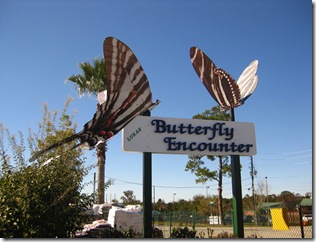
Lukas Nursery Butterfly Encounter in Oviedo, Florida

Image
Lukas Nursery is located in Oviedo, Florida on 1909 Slavia Road. They have a large selection of landscape, indoor, nectar plants and butterfly host plants. They also are the only butterfly conservatory in Central Florida. The Butterfly Encounter is open Sunday through Saturday 9 am to 4 pm. The admission is $5 per person. http://www.lukasnursery.com/index.html     Inside the 4,ooo square foot enclosed butterfly conservatory is a variety of nectar plants and host plants for the butterflies to lay their eggs on. In summer as many as 25 different native butterfly species fly around the conservatory. A flowing waterfall provides a humid climate for the butterflies. The complete butterfly life cycle can be observed inside in the conservatory. The butterflies start their life as a tiny egg laid on their specific food plant. The caterpillars can be watched as they feed on leaves. The collected pupa are hung inside and transparent window (above) for visitors to observe. Th...

Butterfly Pavilion Inside my House

Image
  In Florida the night temperatures have gone below freezing! The water inside our bird bath froze solid and my plants have suffered damage even though I covered them in blankets. Because of our weather these past days, I am unable to release my emerged butterflies outside. Instead I released my three Gulf Fritillaries inside and turned our house into a butterfly pavilion! To keep my butterfly guests happy, we brought in potted Penta flowers and moistened a paper towel with tropical punch that is high in sugar. To keep the butterflies warm, I moved them to my room by the window and brought in a portable heater.  They were most interested in the bright light fixture up on the ceiling. Their behavior was similar to moths who are drawn to bright lights. The butterflies opened their wings to absorb the heat. The rays of light illuminated their wings. In this angled picture you can see the fuzz that is located near the abdomen and thorax. These “hairs” are actually tin...

The Cloudless Sulphur’s Leaf Shaped Chrysalis

Image
The Cloudless caterpillar attaches itself to stationary object before making its unique chrysalis. To secure its body the caterpillar attaches its hind legs to a branch and then wraps a silk strand around its waist. After patient waiting, its skin will begin to split. Underneath is a soft chrysalis that looks like a leaf! The Cloudless Sulphur's chrysalis blends in with the surrounding leaves of its host plant. The chrysalis's green color and arched shape helps to further disguise the developing butterfly. On the chrysalis are white or green lines that look like the veins of a leaf. The chrysalis is pointed on both ends to look like the stem of a leaf.   Cloudless Sulphur chrysalises can be green, yellow, pink, and I have even found a purple chrysalis. Green chrysalises are best disguised when around green leaves. The yellow chrysalises are camouflaged among yellow flowers of the Cassia trees. In fall as leaves change color and die, Cloudless Sulphurs can make a pur...

Cloudless Sulphur Caterpillar Camouflage

Image
Cloudless Sulpur caterpillars use camouflage for protection as they feed on Cassia trees. During the summer months, the caterpillar's green color matches the leaves of Cassia plants. In November the Cassia becomes covered in beautiful yellow flowers. As the caterpillars eat the flowers, they begin to turn yellow. This yellow color provides perfect camouflage while the caterpillar crawls among the blossoms. This Cloudless Sulphur caterpillar has a greenish hue. It has been feeding on Cassia leaves. Cloudless Sulphur caterpillars green color provides the best camouflage during the summer months. The caterpillars will begin turning yellow only in the fall months when the Cassia tree blooms and the caterpillar feeds on the yellow flowers. The arrow points to the silk created by the industrious creature. The silk secures the bud to the stem and keeps it from falling with the extra weight of the caterpillar. One day in my garden, I ...

Diseases, Defects, and Injuries of Butterflies

Image
In nature, butterflies with defects soon become part of the food chain. When raising caterpillars and butterflies inside an enclosed area, injuries and disease can be observed first hand.  Some of the problems a caterpillar may encounter are bacterial diseases, defects during development, or falling before the butterflies wings are completely dry. Watching a butterfly struggle as it tries to overcome its impairment is saddening. I have also learned that in the wild the survival rate of an egg making it to a butterfly is less than 10%! By rearing caterpillars in captivity this can be reversed so that up to 90% can survive to be butterflies.  Bacterial Infections Active caterpillars crawled over my soft chrysalises causing punctures . Raising caterpillars in captivity has many benefits, but it has disadvantages as well.  I have had as many as forty caterpillars in one container. The result was that the active caterpillars began to crawl ove...